


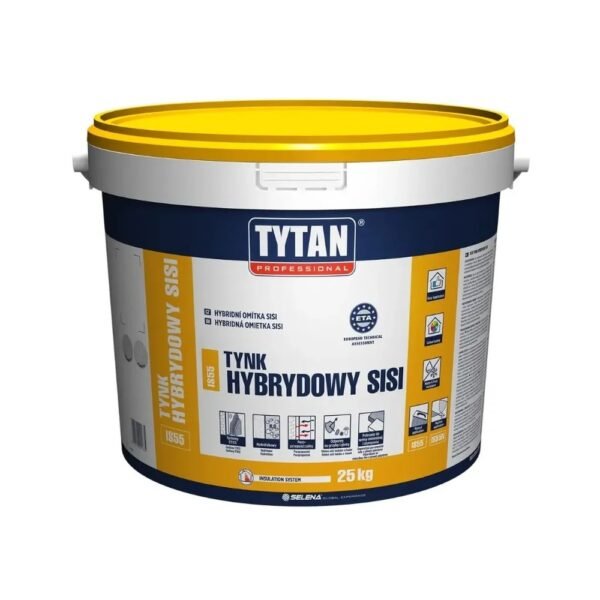
Tytan SISI IS55N Spray Silicone Render 25kg
Price range: £74.99 through £80.82 ex. VAT This product has multiple variants. The options may be chosen on the product page
External render is a protective, decorative coating applied to the outside walls of a building. Also known as external wall render, exterior render or simply outdoor render, it shields brick, block and masonry from rain, frost and weathering while transforming the look of any property. At Penguin BM we supply a full range of external renders and decorative finishes for both render-only and external wall insulation projects, ready for fast UK delivery or collection from our Wembley store. Explore the render types below, compare finishes, and shop trade-quality external renders in a wide choice of colours and textures.
What Is External Render?
External render is the outer coating that sits on the face of a wall, usually applied over a prepared base or reinforced basecoat. Traditional renders are mixed on site from sand and cement, while modern factory-made renders arrive ready mixed and self-coloured, so they never need painting. Whether you are rendering external walls on a new build or refreshing a tired facade, the render provides both weather protection and a decorative finish.How External Render Protects Your Walls
The render forms the first line of defence against driving rain, frost and airborne dirt. Water-repellent finishes stop rain penetrating the wall, while breathable renders still let moisture vapour escape from inside the building. This balance helps prevent damp, blown plaster and freeze-thaw damage, extending the life of the wall behind it.Where External Render Is Used
Exterior wall rendering suits houses, extensions, flats and commercial buildings. It can be applied over brick, block, concrete and sound existing render, or used as the topcoat on an external wall insulation system. It is equally popular for modern self-builds seeking a clean, contemporary look and for renovations covering worn or mismatched masonry.Types of External Render
There are several types of external render, each with its own strengths. The right choice depends on your substrate, exposure, budget and the finish you want.Silicone Render
A premium thin coat topcoat that is breathable, water-repellent and highly crack resistant. It is the go-to finish for most modern facades and insulated walls. Browse our silicone renders for the full range.Acrylic Render
A cost-effective synthetic thin coat finish with an excellent colour range and strong flexibility, though it is less breathable than silicone. Ideal where value and vivid colour matter most. See our acrylic renders.Silicone-Silicate & Mineral Render
Hybrid silicone-silicate (SISI) renders blend silicone water repellency with silicate breathability, giving a balanced performance at a competitive price. Mineral renders are breathable, cement-based finishes that pair well with mineral wool insulation systems.Monocouche Render
A thick, one-coat, through-coloured cement-based render, usually applied at around 15mm to 18mm with a scratched finish. Popular on new build because it needs no painting and can be applied by hand or machine.Cement & Lime Render
Traditional sand and cement is the budget classic - durable but rigid and prone to cracking, and it usually needs painting. Lime render is highly breathable and flexible, making it the preferred choice for older, solid-wall and heritage properties that need to breathe.Spray-Applied Render
Many thin coat and decorative renders can be machine or spray applied to cover large elevations quickly and evenly. Explore our spray renders for suitable products.Render Types Comparison Table
| Render Type | Breathability | Water Repellency | Crack Resistance | Needs Painting | Best For |
|---|---|---|---|---|---|
| Silicone | High | Very high | Very high | No | All masonry & EWI, low maintenance |
| Acrylic | Medium | High | High | No | Vivid colours, value projects |
| Silicone-Silicate | High | High | High | No | Exposed elevations, balanced cost |
| Mineral | High | Medium | Medium | Usually | Breathable systems, mineral wool EWI |
| Monocouche | High | Medium | Medium | No | New build, one-coat through colour |
| Cement | Medium | Low | Low | Usually | Budget, traditional, durable base |
| Lime | Very high | Low | Medium | Optional | Heritage & older solid-wall homes |
How to Choose the Right External Render
Picking the best external render comes down to three main factors: the wall behind it, the look you want and your budget. Our guide to choosing the right render goes deeper, but here is the quick decision guide.Substrate & Breathability
Older solid-wall and heritage buildings need a breathable render such as silicone, mineral or lime, so trapped moisture can escape. Modern masonry and insulated walls can use a wider range of finishes. Always match the render to a compatible base and primer for the substrate.Finish, Texture & Colour
Thin coat renders give a smooth, contemporary look, while monocouche and traditional renders offer scratched or textured finishes. Grain size sets the texture, and self-coloured products remove the need for painting.Budget & Maintenance
Cement render is cheapest upfront but needs more upkeep and repainting. Silicone costs more per tub but lasts longest with the least maintenance, while acrylic sits in the middle. Think in terms of whole-life cost, not just the price of the tub.External Render Systems & Build-Up
Modern external render works as part of a compatible system, built up in layers for strength, adhesion and long-term durability. Mixing components from different systems can cause cracking and voided warranties, so keep the build-up consistent.Base Coat & Reinforcement Mesh
A reinforced base coat with fibreglass mesh embedded into it levels the surface and creates a strong, crack-resistant bed for the decorative topcoat.Primer & Topcoat
Once the basecoat has cured, a coloured primer improves adhesion and coverage before the final render is applied and the texture rubbed up. The topcoat is the weather-facing, decorative layer everyone sees.External Render for External Wall Insulation (EWI)
On an EWI build-up the render sits over adhesive, insulation board, basecoat and mesh, then primer. Silicone and silicone-silicate are the preferred finishes here. See our dedicated external render for EWI range, or explore the K Rend system.Benefits of External Rendering
Weather Protection
Repels driving rain, resists frost and reduces the risk of damp, mould and algae, protecting the wall for decades.
Kerb Appeal & Value
Transforms tired brickwork with a crisp, modern finish in a wide range of colours, boosting kerb appeal and property value.
Low Maintenance
Self-coloured, easy-clean finishes need little upkeep and, on EWI, protect the insulation and help retain its thermal performance.
Colours, Textures & Finishes
External render finishes range from ultra-smooth to heavily textured, in almost any colour, so you can match adjacent materials or make a facade stand out.Grain Sizes & Textures
Grain size controls the texture. A 1.0mm to 1.5mm grain gives a fine, smooth thin-coat look, while 2.0mm and above create a coarser rubbed texture. Larger grains also suit spray application on big elevations.Colour Options & Samples
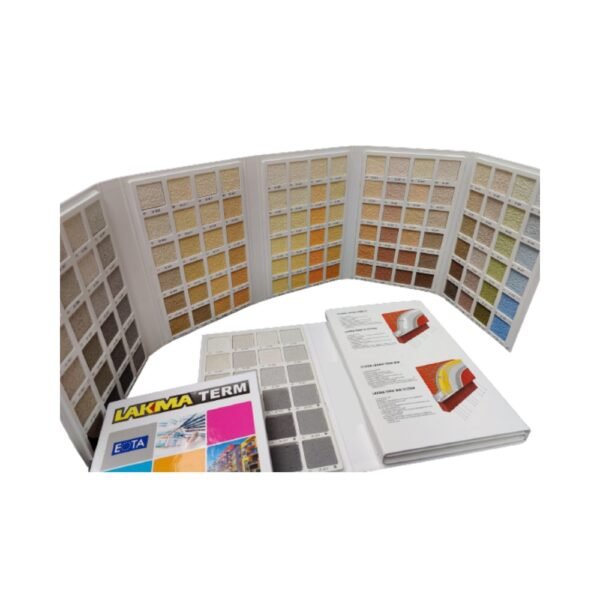
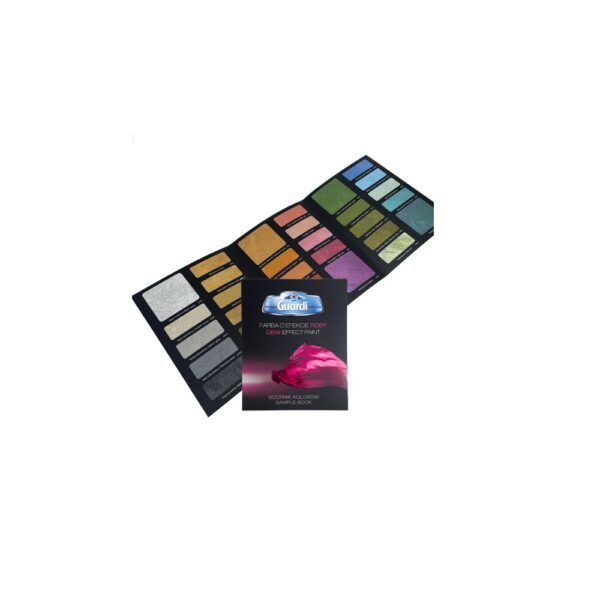
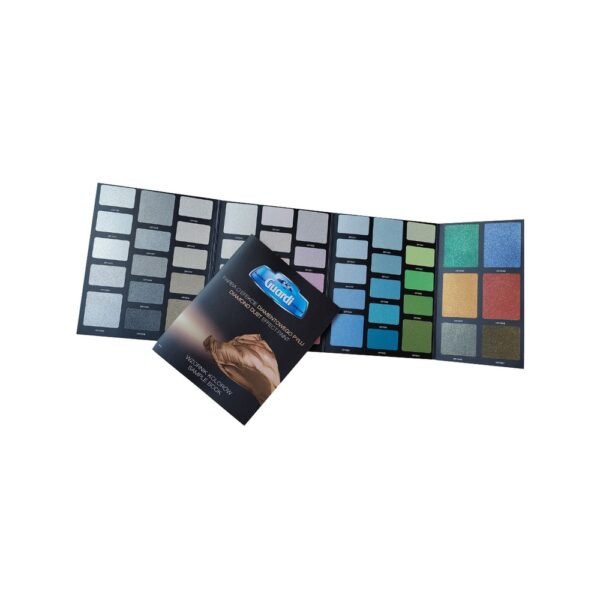
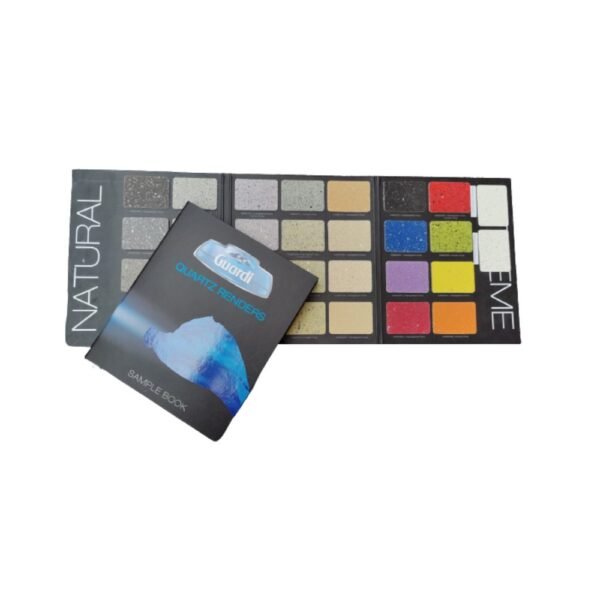
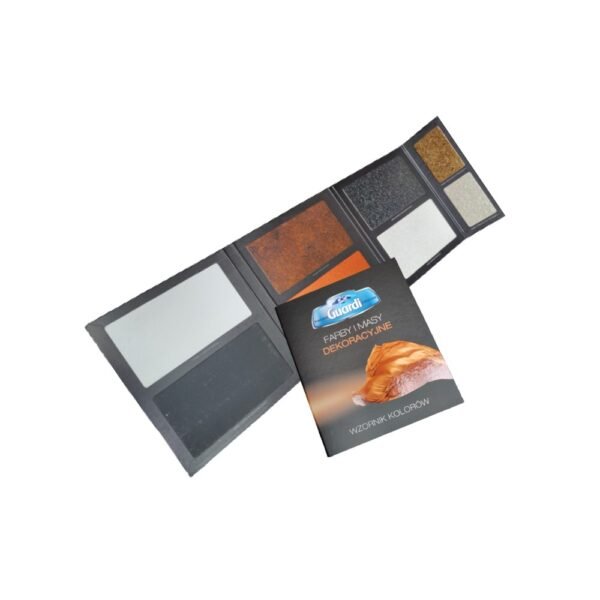
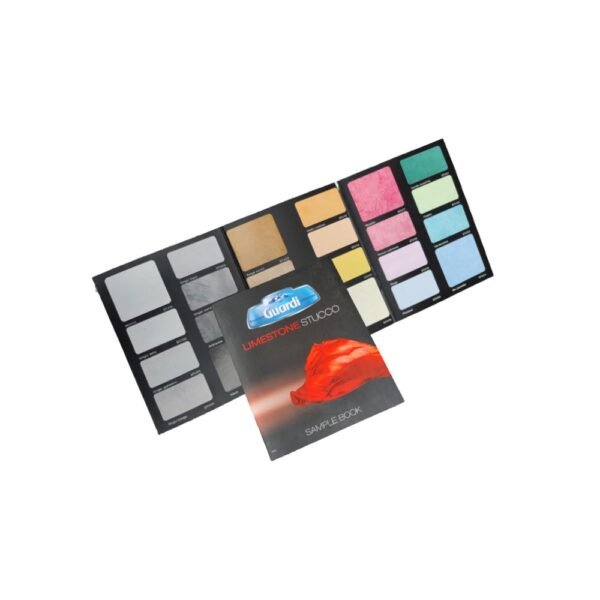
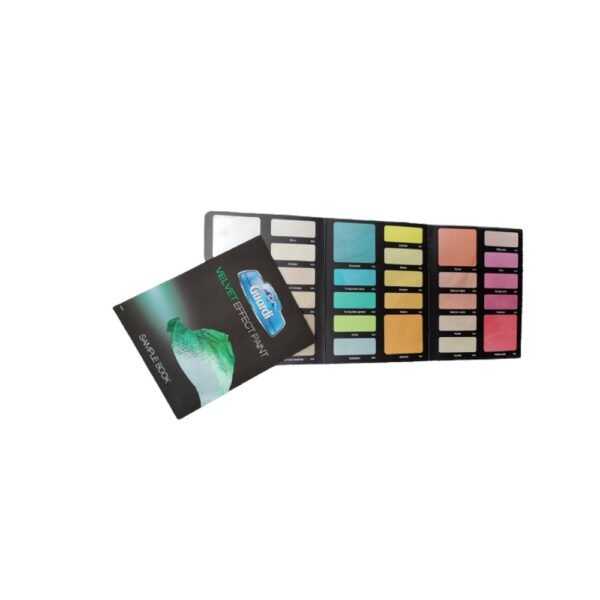
Most factory-made renders are available in extensive through-colour palettes. Order physical samples and colour charts before you buy to check the shade in daylight against your property.How External Render Is Applied
External rendering is a skilled job best carried out by an experienced plasterer. Below is the typical process, but always follow the manufacturer's data sheet for each product.Surface Preparation
The wall must be sound, clean and stable. Repair defects, stabilise any movement and fit stop and angle beads around openings and corners. Any new finish is only as good as the wall behind it.Application Methods (Hand & Machine)
Render can be applied by hawk and trowel or by machine and spray for speed on larger areas. Rub up the texture with a plastic float for a consistent finish, using the right rendering tools throughout.Weather & Curing Conditions
Apply in dry conditions, ideally between 5C and 25C, and avoid rain, strong direct sun or frost until the render has fully cured. Work wall-to-wall in a single pass to prevent visible joins.External Render Cost
Costs vary by render type, finish and whether you buy the render alone or as a full system.Material Cost per Tub & per m2
As a guide, ready-mixed silicone and acrylic renders typically start from around £55 to £65 ex VAT per 25kg tub, with a tub covering roughly 8 to 12 m2 depending on grain size. Cement and monocouche powders are cheaper per bag. A full external wall insulation and render finish, installed, usually falls around £70 to £90 per m2. Use our EWI calculator to estimate the quantities you need.What Affects the Price
Price depends on the render type, grain size, colour (deep and bespoke shades can cost more), the quantity you buy and whether you purchase a complete system. Buying in bulk unlocks trade pricing.Maintenance & Aftercare
Modern external render is low maintenance. Rain keeps most surfaces clean, and occasional low-pressure washing removes any build-up in shaded or exposed spots. Years later, a breathable masonry or silicone paint can refresh the colour without compromising a breathable system.Shop External Render at Penguin BM
Browse trade-quality external renders and decorative finishes from trusted brands, ready mixed and available in multiple colours and grain sizes at trade prices. Shop by type across our silicone renders, acrylic renders and spray renders, add character with decorative templates and painting and decorating supplies, or order colour samples before you commit.Frequently Asked Questions
What is the best type of external render?
For most modern projects, silicone render offers the best all-round performance, being breathable, water-repellent, crack resistant and low maintenance. Lime render suits older, breathable buildings, while cement and monocouche can be more cost-effective on certain projects.Is external render breathable?
It depends on the type. Silicone, mineral and lime renders are breathable and let moisture escape, which is important for solid-wall and older properties. Acrylic and standard cement renders are less breathable and better suited to modern construction.How long does external render last?
A well-applied external render typically lasts 20 to 30 years or more, depending on the render type, substrate, exposure and quality of application. Thin coat silicone systems are among the longest lasting and lowest maintenance.Do I need planning permission to render my house?
In most cases external rendering falls under Permitted Development, but permission is usually required in Conservation Areas, National Parks, Areas of Outstanding Natural Beauty and on listed buildings. Always check with your local planning authority before starting.Can I apply external render myself?
Small areas are possible for confident DIYers, but rendering a whole house is skilled work. A smooth, even, crack-free finish depends on correct preparation, mixing and timing, so most people use an experienced renderer for the best results.Order External Render
Buy external render online with fast UK delivery, or collect from our Wembley store. For trade pricing, bulk orders or advice on the right render system for your walls, contact our team.
Contact our team