No products in the cart.


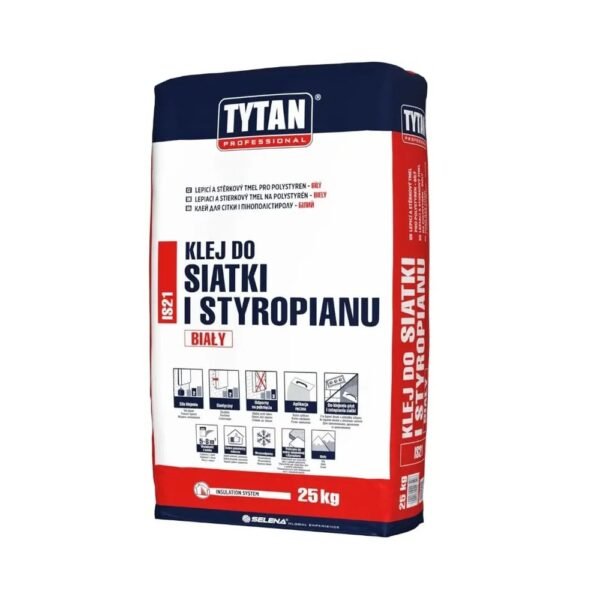
Tytan IS21 EPS Adhesive & Basecoat 25kg
Price range: £12.00 through £13.00 ex. VAT This product has multiple variants. The options may be chosen on the product page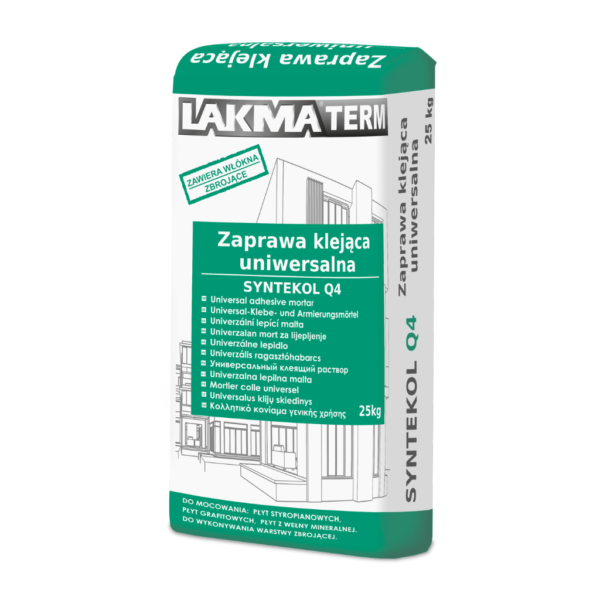
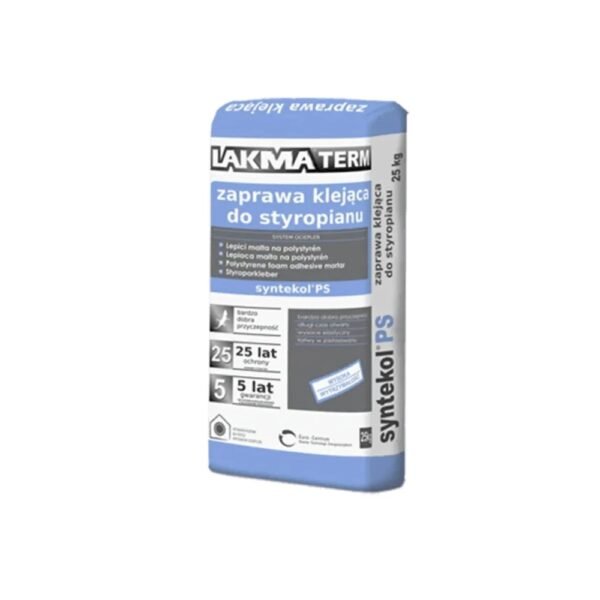
Lakma Syntekol PS Insulation Adhesive 25kg
Original price was: £12.49.£11.00Current price is: £11.00. ex. VAT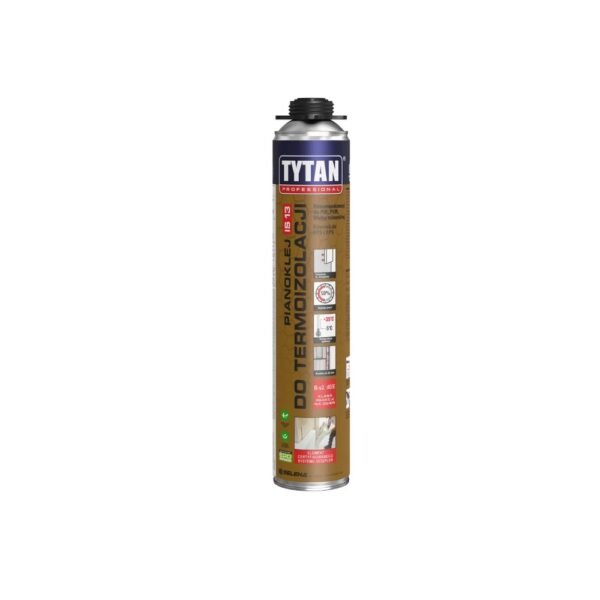
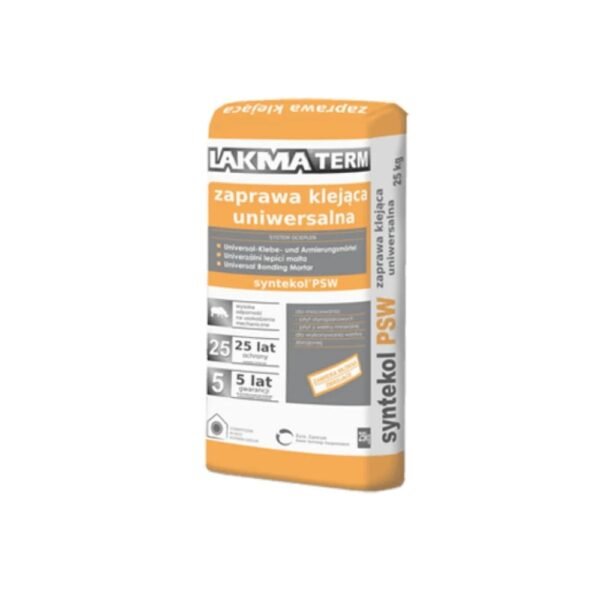
Lakma Syntekol PSW Reinforcement Mortar 25kg
Price range: £12.00 through £13.00 ex. VAT This product has multiple variants. The options may be chosen on the product page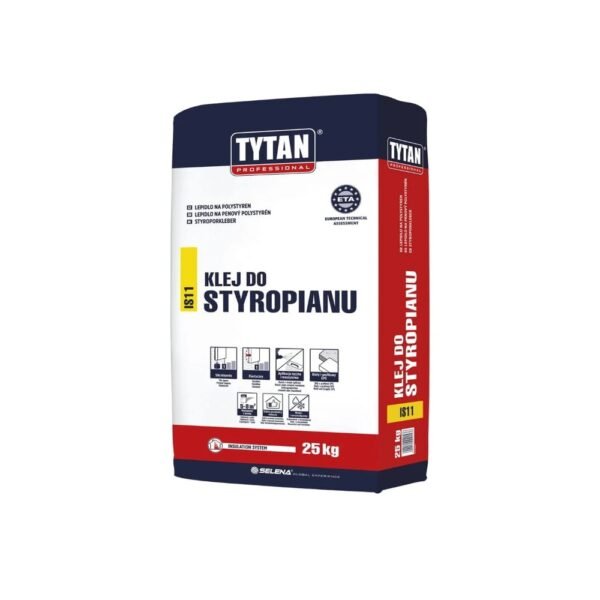
Tytan IS11 EPS Insulation Board Adhesive 25kg
Original price was: £12.49.£11.00Current price is: £11.00. ex. VATWhether you're fixing EPS polystyrene boards to a masonry wall or installing mineral wool panels as part of an External Wall Insulation (EWI) system, choosing the right insulation board adhesive is critical. The wrong product can damage the board, fail the bond or void your system's certification. Browse our full range of polyurethane foam and cementitious adhesives — all compatible with leading EWI systems and available with fast UK delivery.
Types of Insulation Board Adhesive
There are two main categories of adhesive used for bonding insulation boards: polyurethane (PU) foam adhesives and cementitious adhesive mortars. Each has distinct advantages depending on the insulation type, substrate and project conditions.
Polyurethane (PU) Foam Adhesive
Dispensed from a pressurised 850ml canister using an applicator gun, PU foam adhesives require no mixing and no water. They cure rapidly — typically allowing mechanical dowelling within 2 hours — and are suitable for use in temperatures as low as −10 °C, making them the preferred choice for winter installations.
- No mixing or water required — ready to use straight from the canister
- Coverage: up to 10 m² per 850ml canister
- Suitable for EPS, XPS and PIR/PUR boards
- Allows mechanical fixing within 2 hours (vs 24–48 hrs for cementitious)
- Works in temperatures from −10 °C to +40 °C
- Ideal for: fast turnaround projects, overhead applications, cold weather
Popular products: Ceresit CT84 Express Plus, Bond It Mega Stik, Grafen Professional PU Foam Adhesive.
Cementitious Adhesive Mortar
Supplied as a dry powder in 25kg bags, cementitious adhesives are mixed with water on site and applied with a notched trowel or gauging trowel. Many are dual-purpose 2-in-1 products — used for both bonding insulation boards and embedding the fibreglass reinforcement mesh in the basecoat layer. This simplifies logistics and reduces compatibility risks between materials.
- Coverage: approximately 4–5 m² per 25kg bag
- Suitable for EPS, graphite EPS and mineral wool boards
- Many products serve as both adhesive and mesh basecoat (2-in-1)
- Cost-effective for large, flat surfaces
- Excellent bond to masonry, brick and concrete substrates
- Approved for use in BBA and ETA certified EWI systems
Popular products: Atlas Hoter U, Ceresit CT80, Ceresit ZU, Roker U, Syntekol PSW.
PU Foam vs Cementitious Adhesive — Which Should You Choose?
The table below summarises the key differences to help you select the right adhesive for your project:
| Feature | PU Foam Adhesive | Cementitious Mortar |
|---|---|---|
| Mixing required | No — ready to use | Yes — mix with water |
| Coverage per unit | ~10 m² / 850ml canister | ~4–5 m² / 25kg bag |
| Time to mechanical fixing | ~2 hours | 24–48 hours |
| Working temperature | −10 °C to +40 °C | +5 °C to +30 °C (standard) |
| Dual-purpose (adhesive + mesh) | No | Yes (2-in-1 products) |
| Compatible boards | EPS, XPS, PIR, PUR | EPS, Graphite EPS, Mineral Wool |
| Best for | Speed, winter, overhead work | Large projects, cost efficiency |
| Skill level | Beginner-friendly | Experienced applicator preferred |
Choosing the Right Adhesive by Board Type and Substrate
Not all adhesives are compatible with all insulation boards or wall surfaces. Using the wrong product can melt or etch sensitive foam boards, result in poor adhesion or fail system certification requirements. Use the guide below to select the correct adhesive for your specific combination.
By Insulation Board Type
- EPS (Expanded Polystyrene): Compatible with most standard cementitious adhesives and PU foam adhesives. The most widely used combination in UK EWI systems. Always use water-based or PU foam products — solvent-based adhesives will dissolve EPS.
- Graphite EPS (Grey EPS): Same compatibility as standard EPS. Graphite EPS has enhanced thermal resistance but identical fixing requirements.
- XPS (Extruded Polystyrene): Requires adhesives with strong initial grab. PU foam adhesives are often preferred due to XPS's smooth, low-porosity surface. Avoid solvent-based adhesives — they will damage the board.
- Mineral Wool / Rock Wool: Requires a flexible, high-grab adhesive. Specialised cementitious mortars (e.g., Ceresit CT80) or PU foam adhesives rated for mineral wool are recommended. Standard EPS adhesives may not achieve sufficient bond strength.
- PIR / PUR (Polyisocyanurate / Polyurethane): Compatible with PU foam adhesives. Check manufacturer TDS for specific cementitious product compatibility. Often used in cavity wall and pitched roof applications.
- Phenolic Foam: Use PU foam adhesive or a premium basecoat. Always verify compatibility with the board manufacturer's technical datasheet before application.
By Substrate (Wall Surface)
- Masonry, Brick, Concrete: Compatible with both PU foam and cementitious adhesives. The most straightforward substrate for EWI installation. Ensure the surface is sound, clean and dry before application.
- Sand-Cement Render (existing): Check for hollow spots and delamination. If sound, both adhesive types can be used. Prime porous surfaces with a bonding primer before applying cementitious mortar.
- Timber / OSB / Structural Boards: Requires a specifically rated adhesive. Mechanical fixings are especially important on timber frames — adhesive alone is typically insufficient as the primary fixing method.
- Steel Frame / Metal Substrate: Use adhesives rated for non-mineral substrates. Consult the system manufacturer for approved product combinations.
How Much Adhesive Do You Need?
Coverage varies depending on the application method, wall flatness and product used. Use the guide below as a starting point and always add a 10–15% allowance for wastage and uneven surfaces.
Quick Coverage Reference
| Product Type | Unit Size | Coverage (ribbon-and-dab) | Coverage (full surface) |
|---|---|---|---|
| PU Foam Adhesive | 850ml canister | ~8–10 m² | ~4–5 m² |
| Cementitious Mortar (standard) | 25kg bag | ~4–5 m² | ~2–3 m² |
| Cementitious Mortar (thin coat) | 25kg bag | ~5–6 m² | N/A |
Example: For a 50 m² wall using PU foam adhesive with the ribbon-and-dab method, you would need approximately 5–7 canisters (allowing for a 15% wastage factor). For cementitious mortar on the same area, allow for approximately 10–13 bags.
How to Apply Insulation Board Adhesive
Correct application is as important as choosing the right product. The goal is to achieve a minimum of 40% surface contact between the insulation board and the substrate — a requirement under EN 13163 and ETAG 004 certification guidelines for EWI systems.
Step 1 — Prepare the Substrate
Ensure the wall surface is structurally sound, clean, dry and free from dust, oil, loose paint or efflorescence. Fill any major voids or cracks with a suitable repair mortar and allow to cure fully. On highly porous or glazed surfaces, apply a bonding primer and allow to dry before proceeding.
Step 2 — Apply the Adhesive (Ribbon-and-Dab Method)
The ribbon-and-dab method is the UK industry standard for EWI board bonding:
- Apply a continuous bead of adhesive (3–4 cm wide) around the entire perimeter of the insulation board, set back approximately 2–3 cm from the board edge.
- Apply 3–5 additional dabs or spots of adhesive evenly across the centre of the board.
- Press the board firmly and evenly against the substrate using a slight twisting motion to ensure good contact.
- Check alignment with a spirit level. Stagger board joints in a brickwork pattern — do not align vertical joints.
- Do not fill gaps between boards with adhesive. Use thin strips of insulation board to fill gaps exceeding 2 mm.
Step 3 — Allow to Cure and Install Mechanical Fixings
Allow the adhesive to cure fully before installing mechanical fixings (dowels or anchors). With PU foam adhesive, this is typically 2 hours. With cementitious mortar, wait a minimum of 24–48 hours (or as per the product's technical data sheet).
Do You Always Need Mechanical Fixings?
In the vast majority of professional EWI applications in the UK, adhesive alone is not sufficient as the sole fixing method. Mechanical fixings (plastic or steel thermally broken dowels/anchors) are required to resist wind loads, thermal movement and long-term structural creep. The number of fixings per board is determined by the height of the building and local wind load requirements — typically 4 to 8 fixings per board. Always consult the system's BBA Certificate or ETA approval for the specified fixing pattern.
Standards, Certifications & Technical Documents
When specifying insulation board adhesive for a professional EWI system, ensure the product is approved within the system's certification. Key standards and approvals to look for include:
- BBA Certificate (British Board of Agrément): The primary UK approval for EWI systems. Specifies which adhesives, boards and mechanical fixings are approved for use together.
- ETA (European Technical Assessment): Equivalent European approval, often held alongside BBA certification by leading system manufacturers.
- EN 13163: European standard for factory-made EPS insulation products. Relevant when specifying adhesives compatible with certified boards.
- ETAG 004: The European guideline for ETICS/EWI systems, defining performance requirements including adhesion strength.
Technical Data Sheets (TDS) and Safety Data Sheets (SDS) for all products in our range are available to download on each individual product page.
Frequently Asked Questions
What is the best adhesive for insulation boards?
The best adhesive depends on your insulation board type, substrate and project conditions. For speed and ease of use — especially in cold weather — a PU foam adhesive (such as Ceresit CT84 Express Plus) is the top choice. For large-scale EWI projects where a 2-in-1 adhesive and basecoat is preferred, a cementitious mortar (such as Atlas Hoter U or Ceresit CT80) offers better value per m².
Can I use expanding foam as insulation board adhesive?
Standard expanding/gap-filling foam should not be used as an insulation board adhesive. It is not formulated to achieve the consistent 40% surface contact required by EWI certification standards, and it is not approved in any BBA or ETA certified system. Always use a purpose-made PU adhesive foam or cementitious adhesive mortar rated for insulation board bonding.
How much insulation board adhesive do I need per m²?
With a PU foam adhesive, expect coverage of approximately 0.1 litres per m² using the ribbon-and-dab method (1 canister of 850ml ≈ 8–10 m²). With a cementitious mortar, allow approximately 5–6 kg per m² (1 bag of 25kg ≈ 4–5 m²). Always add a 10–15% allowance for wastage and surface irregularities.
Can insulation board adhesive be used in cold weather?
PU foam adhesives (e.g., Ceresit CT84 Express Plus) are specifically formulated for cold conditions and can be applied in temperatures as low as −10 °C. Standard cementitious mortars generally require a minimum substrate and ambient temperature of +5 °C during application and curing. Some manufacturers offer cold-weather or express-setting cementitious formulations rated for lower temperatures — always check the product's technical data sheet.
Do I need mechanical fixings as well as adhesive?
Yes, in almost all professional EWI installations. Adhesive acts as the primary bond during initial installation, but mechanical fixings (thermally broken plastic dowels/anchors) are required to permanently resist wind loads and structural movement over the long term. The number and pattern of fixings is defined by the system's BBA Certificate and the building's height and exposure zone. Installing adhesive only — without mechanical fixings — is not compliant with UK EWI system specifications and may invalidate any system warranty.
What's the difference between PU foam adhesive and cementitious adhesive?
PU foam adhesive comes in a pressurised canister, requires no mixing, cures in ~2 hours, covers up to 10 m² per can and works in sub-zero temperatures. Cementitious mortar comes as a dry powder mixed with water, takes 24–48 hours to cure, covers 4–5 m² per 25kg bag but can double as both adhesive and mesh basecoat (2-in-1), making it more cost-efficient on larger projects.
Will solvent-based adhesives damage foam insulation boards?
Yes. Solvent-based adhesives will chemically attack and dissolve EPS and XPS insulation boards. Always use water-based, cementitious or specifically PU foam-rated adhesives when bonding polystyrene insulation. If in doubt, test a small area on a scrap board before full application.
Is insulation board adhesive the same as render adhesive?
Not always. Some cementitious 2-in-1 products function as both the board adhesive and the render/basecoat carrier for the fibreglass mesh reinforcement layer. However, standalone render adhesives or skim coats are formulated differently and should not be used interchangeably with insulation board adhesives. Always check that the product is specifically approved for board bonding within your EWI system.