No products in the cart.


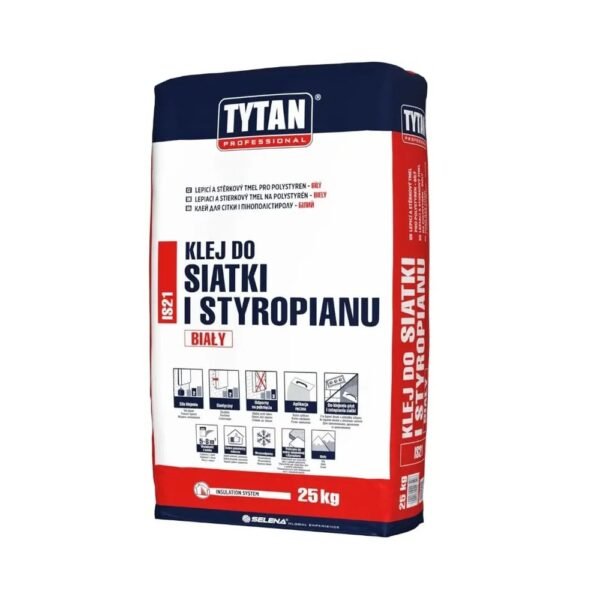
Tytan IS21 EPS Adhesive & Basecoat 25kg
Price range: £12.00 through £13.00 ex. VAT This product has multiple variants. The options may be chosen on the product page
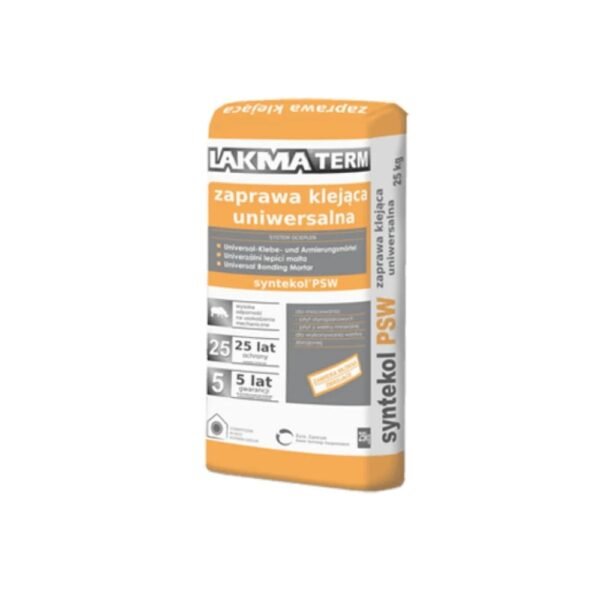
Lakma Syntekol PSW Reinforcement Mortar 25kg
Price range: £12.00 through £13.00 ex. VAT This product has multiple variants. The options may be chosen on the product pageRender basecoat is the reinforced layer that holds an external wall insulation system together. Applied over the insulation boards with fiberglass mesh embedded in it, the basecoat spreads stress across the facade, resists impact and gives the finish render a flat, stable surface to bond to. At Penguin BM you'll find render basecoats and dual-purpose adhesive and basecoat mortars for EPS, graphite EPS and mineral wool systems, ready for delivery across London and the Home Counties or collection from our Amersham trade counter.
Whether you are an installer running several EWI jobs a month or a homeowner insulating a single elevation, choosing the right basecoat is one of the most important decisions in the build-up. It decides how well the system copes with frost, rain, UV and building movement for decades to come.
What does a render basecoat do?
In a typical EWI build-up, the basecoat sits between the insulation board and the decorative finish. It does three jobs:
- Reinforcement - together with the alkali-resistant mesh it forms a tough layer that controls cracking caused by thermal movement.
- Impact resistance - it protects the relatively soft insulation board from knocks, ladders and everyday wear at ground level.
- Levelling - it creates an even, uniformly absorbent surface for the primer and thin-coat finish render.
Many products in this range are dual-purpose adhesive and basecoat mortars, so the same bag can be used to bond the boards to the wall and to build the reinforcement layer. This simplifies ordering and reduces waste on site. You'll find the full range in our EWI adhesive and basecoat category. Always check the product data sheet to confirm which substrates and insulation types each product is approved for.
The EWI build-up: where basecoat sits
A complete external wall insulation system is made of several layers, and each one depends on the one beneath it:
- Substrate - the existing masonry or blockwork wall, cleaned and prepared.
- Adhesive - bonds the boards to the wall.
- Insulation board - EPS, graphite EPS or mineral wool, mechanically fixed with EWI fixings.
- Render basecoat with fiberglass mesh - the reinforced layer this category covers.
- Render primer - evens out absorption and improves adhesion.
- Finish render - the decorative, weatherproof top coat, for example silicone render.
Using basecoat, primer and render from the same system keeps everything compatible and makes it easier to follow the manufacturer's guidance and any system warranty.
Types of render basecoat
| Type | Best for | Key points |
|---|---|---|
| Cement-based (polymer-modified) | EPS and graphite EPS systems | Supplied as dry powder, mixed with water on site. Strong, cost-effective, the most common choice. |
| Mineral / lime-cement | Mineral wool systems | Vapour-open and non-combustible, matching the fire and breathability properties of mineral wool. |
| Fibre-reinforced | Exposed elevations, high-traffic areas | Added fibres improve crack resistance and flexibility. |
| Ready-mixed (pasty) | Repairs, small areas, EPS | No mixing, flexible, useful for patch repairs and details. |
How to choose a basecoat for your insulation
Basecoat for EPS and graphite EPS
Polymer-modified cement basecoats are the standard choice for white and graphite EPS. They bond strongly to polystyrene, are easy to work and offer good value on large areas. On graphite EPS, protect boards from direct sun during installation and apply the basecoat promptly, as grey boards heat up and can move more than white EPS.
Basecoat for mineral wool
Mineral wool systems need a basecoat approved for mineral wool - usually a mineral or lime-cement product. It keeps the whole system vapour-open and non-combustible, which is why mineral wool is often specified on taller buildings and near boundaries. Mineral wool boards are usually given a thin skim coat first to fill the surface fibres before the full mesh layer.
Basecoat for high-impact areas
Ground-floor walls next to paths, driveways and play areas take the most knocks. A fibre-reinforced basecoat combined with a heavier mesh, or a double mesh layer, gives extra protection where it matters most.
How to apply render basecoat with mesh
1. Prepare
Boards must be fixed, dry and flat. Rasp EPS joints, fill gaps with PU foam and fit corner beads, drip beads and window profiles first.
2. Embed the mesh
Apply basecoat with a notched trowel, press the mesh in with around 100 mm overlaps and add diagonal mesh patches at window and door corners.
3. Skim and cure
Skim a second thin coat so the mesh is fully covered and not visible. Let it cure fully before priming.
Work in dry conditions, typically between +5°C and +25°C, and protect fresh basecoat from rain, frost and strong sun. Total thickness and curing time depend on the product, so follow the manufacturer's data sheet.
Common basecoat mistakes to avoid
- Mesh laid directly on the boards - the mesh must be embedded in the basecoat, not trowelled over dry boards, or it won't reinforce anything.
- Mesh showing through - visible mesh means the layer is too thin and the render will crack along the mesh pattern.
- No diagonal patches at openings - corners of windows and doors are where cracks start; always add diagonal mesh strips.
- Missing overlaps - butt-jointed mesh leaves a weak line along every joint.
- Priming too early - applying primer and render on uncured basecoat can lead to patchy colour and poor adhesion.
- Working in the wrong weather - frost, rain or hot sun on fresh basecoat weakens the layer. In winter, keep an eye on overnight temperatures.
How much basecoat do I need?
Coverage depends on the product, the layer thickness and how flat the boards are, so check the consumption per m² on each product page. If you use a dual-purpose adhesive and basecoat, remember to allow for both jobs - bonding the boards and building the mesh layer. As a rule, order a margin of around 10% for waste, reveals and details. The quickest way to get a full material list - boards, adhesive, basecoat, mesh, primer and render - is our free EWI calculator.
Planning a full EWI system?
Work out boards, adhesive, basecoat, mesh, primer and render for your wall in a minute.
Use the EWI calculatorWhat comes after the basecoat?
Once the reinforced layer has cured, apply a render primer to even out absorption and improve adhesion of the finish coat, then apply your chosen thin-coat render. If you haven't picked a finish yet, our silicone render guide explains textures, grain sizes and colours, and our colour chart shows the available shades.
Browse the complete range of boards, fixings, mesh and renders in our external wall insulation category.
Buying render basecoat from Penguin BM
- Collect in Amersham - pick up from our trade counter at 17 White Lion Road, Amersham, HP7 9HZ.
- Delivery to site - across London, Buckinghamshire, Hertfordshire, Berkshire and the wider Home Counties.
- Bulk and trade orders - buying for a full project or several jobs? Call us for a quote on pallet quantities.
- Complete systems - boards, adhesive, basecoat, mesh, fixings, primer and render from one supplier, so every layer is compatible.
Planning an EWI project on a budget? Read our guides to external wall insulation cost in the UK and external wall insulation grants.
Render basecoat - FAQ
Can I use the same product as adhesive and basecoat?
Yes, if it is sold as an adhesive and basecoat. Many EWI mortars are designed for both jobs. Check the data sheet for the insulation types it is approved for.
Do I need mesh in the basecoat?
Yes. Without alkali-resistant fiberglass mesh the basecoat has little tensile strength and the render is far more likely to crack. The mesh should be fully embedded and not visible on the surface.
Which basecoat should I use on mineral wool?
Use a basecoat approved for mineral wool, usually a mineral or lime-cement product. It keeps the system vapour-open and non-combustible.
Can I use render basecoat on masonry without insulation?
Some basecoats are also approved for reinforcing render on masonry or for levelling old render. Check the product data sheet for approved substrates before using it outside an EWI system.
How long before I can prime and render?
It depends on the product, layer thickness and weather. Cold and damp conditions slow curing, so always follow the drying time on the data sheet before applying primer.
Can I apply basecoat in winter?
Only when air and wall temperatures stay above the minimum on the data sheet, usually +5°C, including overnight. Frost on fresh basecoat can permanently weaken the layer.
Can I collect basecoat instead of having it delivered?
Yes. You can collect from our trade counter at 17 White Lion Road, Amersham, HP7 9HZ, or order delivery to site across London, Buckinghamshire and the Home Counties.