No products in the cart.
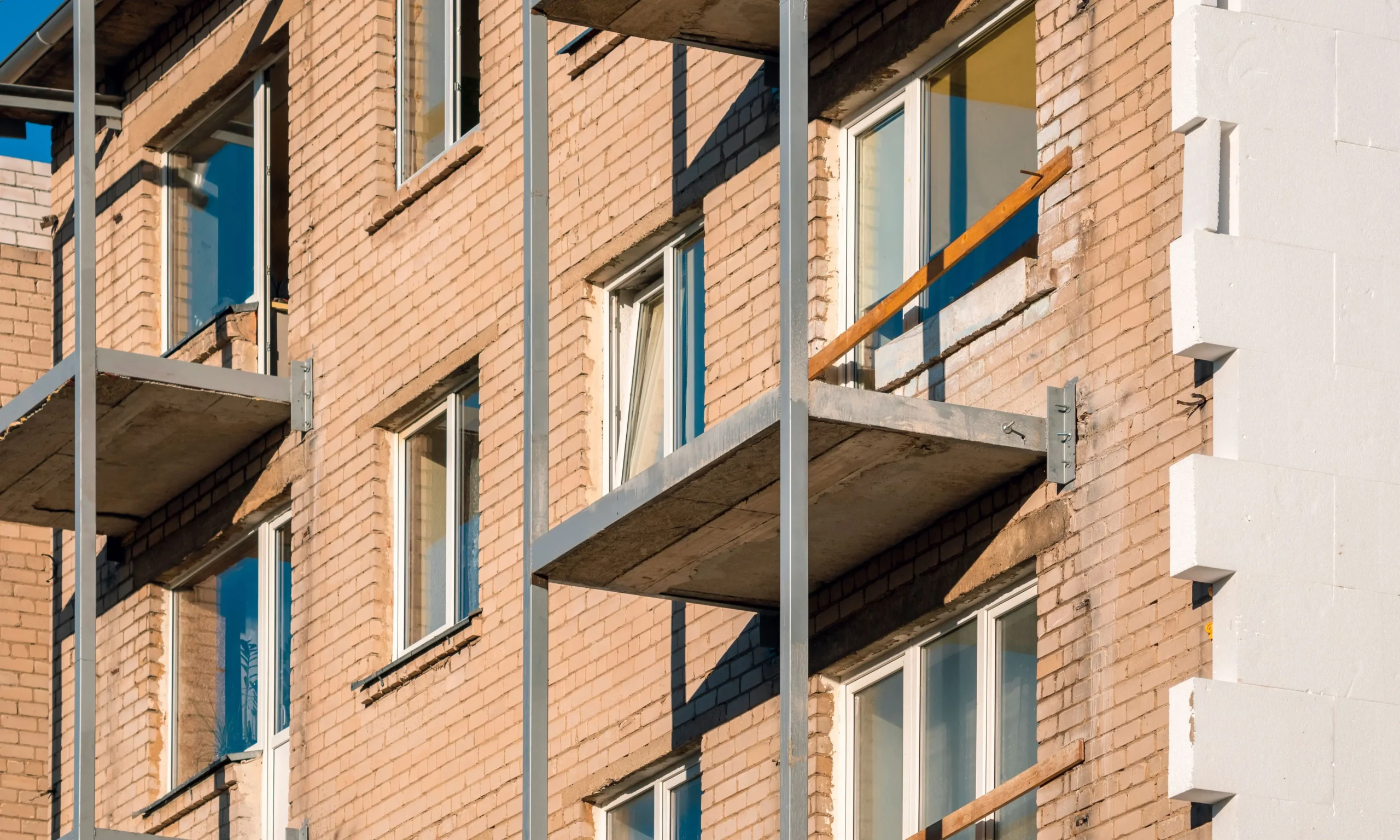
External wall insulation boards are the insulating layer fixed to the outside of a building before it is meshed and rendered, and the board you choose sets the thermal performance, fire rating and breathability of the whole wall. The five you will meet in the UK are EPS, graphite EPS, mineral wool, PIR and phenolic. They differ mainly in three numbers: thermal conductivity (lambda, in W/mK), reaction-to-fire class (Euroclass), and price per square metre. This guide compares all five so you can match the right board to your wall, your budget and the fire rules that apply to your building.
If you are pricing a full project rather than just the insulation, note that the board is only one component. The adhesive, base coat, mesh, fixings and render all sit around it, and we cover those in our guide to external wall insulation materials. Here we stay focused on the boards themselves.
What is an external wall insulation board?
An external wall insulation board is a rigid or semi-rigid panel of insulation, typically 600 x 1200mm or similar, bonded to the masonry with a cement-based adhesive and often reinforced with mechanical fixings. Once fixed, it is covered with a reinforcing mesh embedded in a base coat, then finished with a through-coloured render or, less often, brick slips or cladding.
The board does the thermal work. Everything else protects it, holds it in place and gives it a weatherproof, decorative face. Because the board is buried inside a tested build-up, it is never used on its own: it must form part of a certified system (usually BBA-certified) so that the combination of board, adhesive, mesh and render has been assessed together for durability, weather resistance and fire behaviour. That system-level testing is why you cannot simply mix any board with any render and expect a valid warranty.
An external wall insulation board is most commonly specified for solid-wall homes, generally those built before the 1920s, which have no cavity to fill. Solid brick or stone can lose a large share of a property’s heat through the walls, so wrapping the outside in insulation acts like a continuous thermal jacket with very few cold bridges.
The five main types of external wall insulation boards
EPS (expanded polystyrene)
White EPS is the workhorse of UK external wall insulation. It is light, easy to cut, forgiving to install and by far the cheapest option, which is why it dominates domestic projects. Its thermal conductivity is typically around 0.036 to 0.038 W/mK, so you need a moderate thickness to hit a good U-value.
On fire, EPS is Euroclass E. It contains a flame retardant and does not readily sustain a flame on its own, but it is a combustible plastic and will soften and melt under heat. That is fine for houses and low-rise buildings, but it rules EPS out of taller buildings covered by the combustible-materials rules (more on that below). EPS is moderately vapour-open, which suits most masonry walls, though it is less breathable than mineral wool.
Graphite EPS
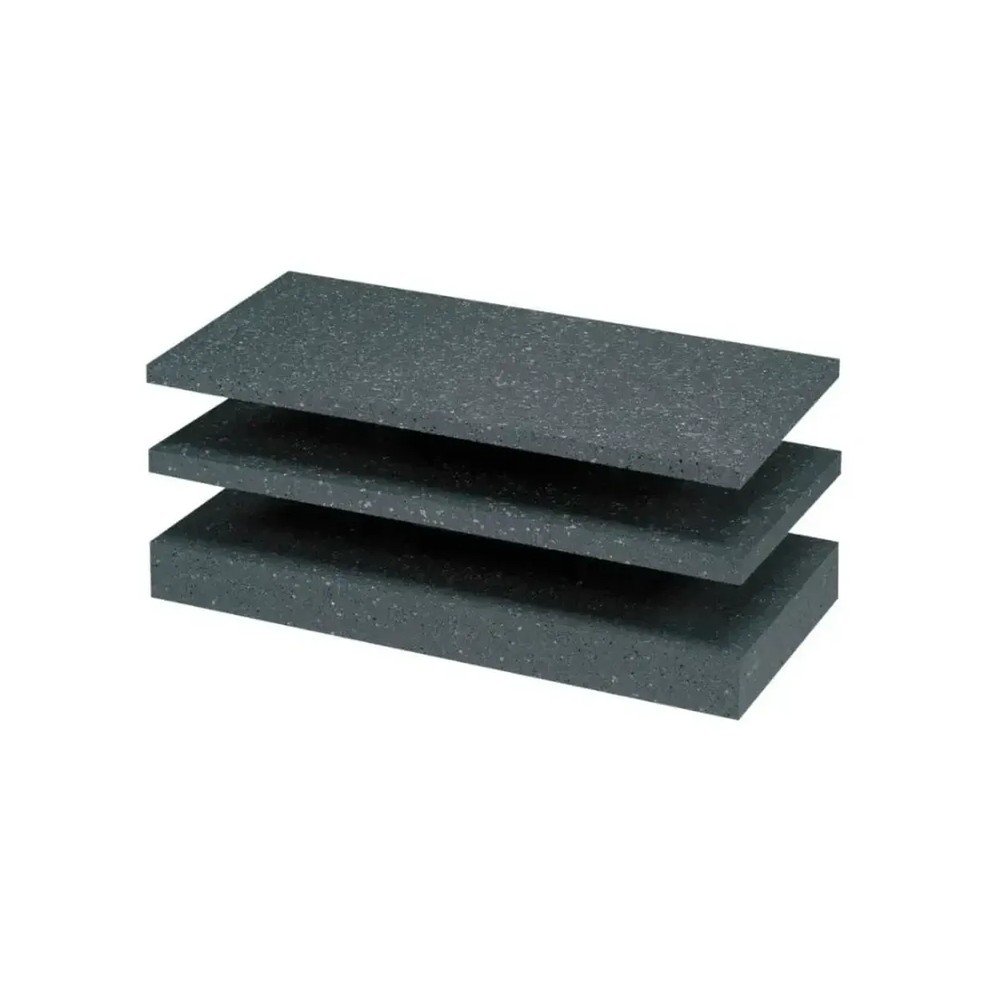
Graphite EPS (often called grey EPS or graphite-enhanced polystyrene) is EPS with graphite particles added to reflect radiant heat. The result is noticeably better thermal performance, usually around 0.030 to 0.032 W/mK, so you reach the same U-value with a thinner board. That matters where you want to keep the wall build-up slim around windows, eaves and boundaries.
In every other respect it behaves like white EPS: Euroclass E, lightweight, easy to work with, and priced a little above standard EPS. For most UK homeowners chasing the best value per millimetre, graphite EPS is the sensible default, and it is the board many suppliers, including Penguin BM, stock as their core line.
Mineral wool
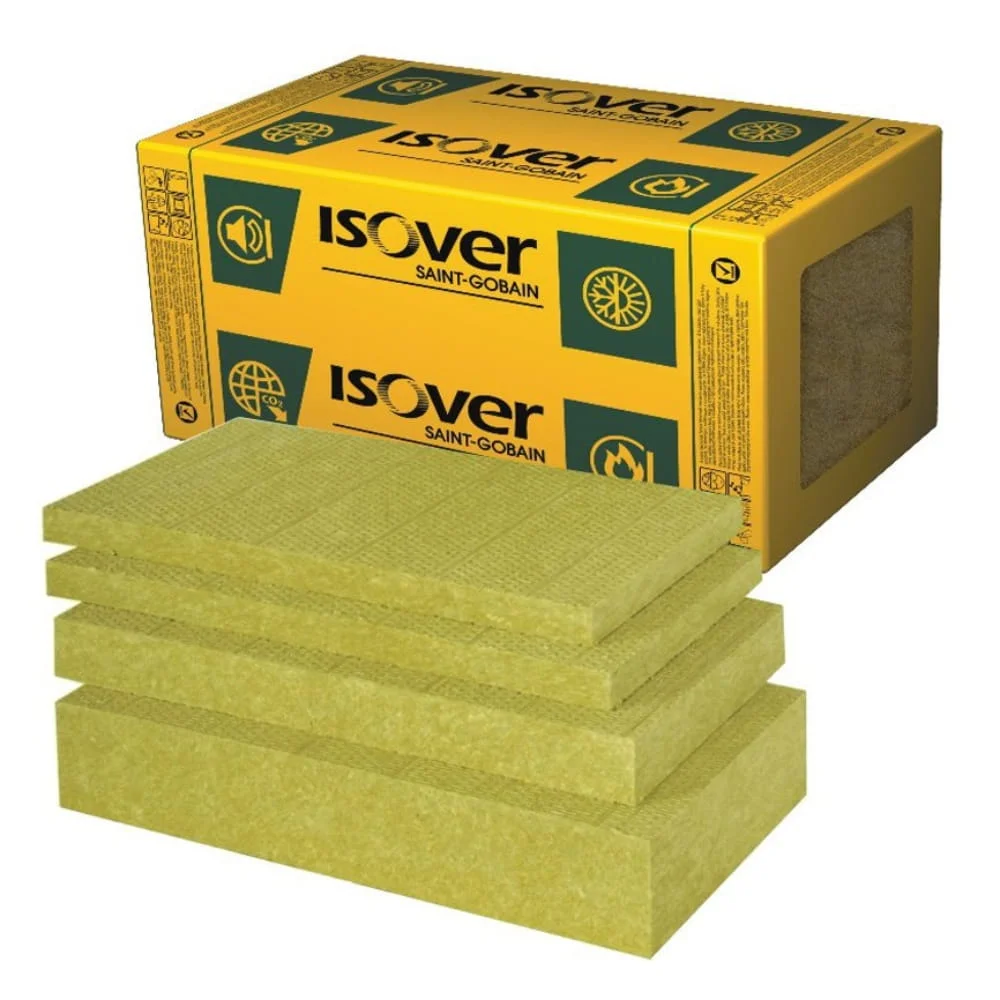
Mineral wool (stone or rock wool) is the non-combustible choice. Its reaction-to-fire class is Euroclass A1, meaning it does not burn and adds effectively nothing to the fire load. That single fact makes it the go-to board wherever fire performance is a priority: flats, taller buildings, and any project where the specifier wants the reassurance of a non-combustible envelope.
Thermally it sits close to EPS, typically around 0.034 to 0.038 W/mK for EWI-grade dual-density boards. Its stand-out property beyond fire is breathability: mineral wool is highly vapour-open, so it lets the wall dry outward. That makes it a strong fit for older, damp-prone or heritage solid walls where trapping moisture would cause problems. The trade-offs are weight (boards are heavier and usually need more fixings and more labour) and cost, as mineral wool is one of the pricier options.
PIR insulation board
A PIR insulation board (polyisocyanurate) is a rigid foam with excellent thermal performance, around 0.022 W/mK, so it delivers a given U-value at roughly half the thickness of EPS. That thinness is its main appeal where space is tight.
For external wall insulation, though, PIR is less common than the boards above. It is usually foil- or tissue-faced, which makes it relatively vapour-closed, so it is not the first choice for breathable heritage walls. Its reaction-to-fire class is typically Euroclass E for the board itself. PIR earns its keep in flat roofs, floors and internal linings more often than in render-carrier EWI, but it does appear in EWI systems where a slim, high-performance build-up is needed and the wall can tolerate a less vapour-open layer.
Phenolic insulation board
A phenolic insulation board offers the best thermal performance of the lot, typically 0.018 to 0.021 W/mK, so it gives the thinnest wall for any target U-value. Like PIR it is a faced rigid foam and is relatively vapour-closed.
Its reaction-to-fire class is usually better than PIR, often Euroclass C, because phenolic tends to char rather than melt, but it is still a combustible plastic and not a substitute for mineral wool where non-combustibility is required. Phenolic is the premium option: you pay for the slim profile, so it makes most sense where every millimetre counts and breathability is not the deciding factor.
External wall insulation boards compared
The table below sets out indicative figures. Lambda values come from typical UK EWI-grade boards; thickness shown is a rough guide to reach a wall U-value of about 0.30 W/m2K on a solid brick wall, which is the level commonly targeted when upgrading an external wall under Building Regulations. Board-only prices are material only, before adhesive, mesh, fixings, render and labour, and they move with energy and resin costs, so treat them as a 2026 starting point rather than a fixed quote.
| Board | Typical lambda (W/mK) | Approx. thickness for ~0.30 W/m2K | Fire class (Euroclass) | Breathability | Indicative board-only cost (£/m2) |
|---|---|---|---|---|---|
| EPS | 0.036 – 0.038 | ~100mm | E | Moderate | £8 – £18 |
| Graphite EPS | 0.030 – 0.032 | ~90mm | E | Moderate | £12 – £25 |
| Mineral wool | 0.034 – 0.038 | ~100mm | A1 (non-combustible) | High | £25 – £45 |
| PIR | ~0.022 | ~60mm | E | Low | £18 – £35 |
| Phenolic | 0.018 – 0.021 | ~55mm | C | Low | £30 – £55 |
A few things stand out. On the classic EPS vs mineral wool board decision, EPS wins on cost and ease of handling, while mineral wool wins decisively on fire and breathability. PIR and phenolic win on slimness but cost more and are less vapour-open. There is no single best board, only the best fit for a given wall and building.
How thick do the boards need to be, and why 100mm is so common
Thickness is where thermal performance actually happens: the thicker the board (or the lower its lambda), the lower the U-value. A 100mm external wall insulation board is the most frequently supplied thickness in the UK because, in standard EPS or graphite EPS, roughly 90 to 100mm is what it takes to bring a typical solid brick wall to around 0.30 W/m2K, which is the usual target when renovating an external wall.
That said, the right thickness depends on your existing wall, your target U-value, and practical limits such as window reveals, roof overhangs and how far the render can project past the boundary. High-performance boards like PIR and phenolic reach the same U-value at 55 to 65mm, which is why they are chosen where a slim profile matters. We go into calculations and trade-offs in detail in our guide to external wall insulation thickness, so we will not repeat that here.
Get EPS, graphite EPS and mineral wool boards at trade prices, delivered across the UK.
Shop nowWhich board should you choose?
Start with fire, because in some cases the law decides for you. For most houses, bungalows and low-rise buildings below 11m, combustible boards such as EPS and graphite EPS are widely used and compliant, provided they are installed as part of a tested, certified system. As the building gets taller, the rules tighten and mineral wool becomes the practical choice.
After fire, weigh breathability. Older solid-wall and heritage properties generally benefit from a vapour-open build-up, which points to mineral wool or, at a push, EPS, rather than the more vapour-closed PIR and phenolic. Then consider space: if window reveals or a boundary line leave you very little room, a slim high-performance board earns its higher price. For everyone else, graphite EPS usually gives the best balance of cost, performance and thickness.
Finally, remember weight and buildability. Mineral wool is heavier and slower to fix, which nudges labour up; EPS and graphite EPS are quick and light. None of this happens in isolation from the rest of the system, so once you have chosen a board, the external wall insulation systems you pair it with should be a matched, certified set rather than an assortment of parts.
Fire ratings and standards you should know
UK fire rules for external walls changed significantly after Grenfell, and they are worth understanding because they can decide your board for you. Reaction to fire is now classified under the European system BS EN 13501-1, which produces the Euroclass ratings (A1, A2, B, C, D, E, F) used throughout this guide. In England, BS EN 13501-1 became the basis for reaction-to-fire classification in Approved Document B in March 2025, replacing the old BS 476 tests.
In England, Regulation 7(2) of the Building Regulations bans combustible materials in the external walls of certain “relevant buildings” (mainly residential and similar) with a storey 18m or more above ground level. In practice that means only A2-s1,d0 or A1 materials, so on those buildings mineral wool is the realistic board. For residential buildings between 11m and 18m, statutory guidance recommends A1 or A2-s1,d0 insulation, without a full ban. The rules differ across the UK: Scotland has had an 11m statutory threshold since 2022, so always check the position for your nation and building height. These thresholds and dates are current for 2026 but fire regulations continue to evolve, so confirm the latest guidance before you specify.
For domestic retrofit, especially anything funded through schemes such as ECO4, the work is expected to follow PAS 2035 (retrofit design and coordination) and PAS 2030 (installation), using accredited installers. Whatever the building, the safest specification uses a system with valid third-party certification (typically BBA) so that the board, render and everything between them have been tested together, and for taller buildings a large-scale BS 8414 test may be the compliance route.
Buying external wall insulation boards in the UK
When you buy external wall insulation boards in the UK, three things drive the delivered price:
Material
The board material sets both performance and price, from budget EPS up to premium phenolic.
Thickness
Thicker boards cost proportionally more, and greater thickness delivers a lower U-value.
Quantity
Trade and bulk orders are considerably cheaper per square metre than one-off retail purchases.
Because the board must sit within a compatible, certified system, it is usually cheaper and simpler to buy the board and its matching components together rather than sourcing them piecemeal.
As a Wembley-based builders merchant supplying across the UK, Penguin BM stocks EPS, graphite EPS and mineral wool boards alongside the adhesives, mesh, fixings and renders that complete the build-up. That means you can specify a single, compatible system, get trade pricing on volume, and avoid the compatibility headaches that come from mixing brands.
Frequently asked questions
EPS vs mineral wool board: which is better?
Neither is universally better; they solve different problems. EPS is cheaper, lighter and easier to fix, and it suits most houses and low-rise buildings. A mineral wool board is non-combustible (Euroclass A1) and highly breathable, so it is the choice for taller buildings, projects where fire performance is critical, and older damp-prone walls that need to dry outward. If cost is the priority, EPS wins; if fire and breathability are, mineral wool wins.
Is a PIR insulation board suitable for external walls?
It can be, and its very low lambda gives a slim wall, but PIR is less common in EWI than EPS, graphite EPS or mineral wool. Foil- or tissue-faced PIR is relatively vapour-closed, so it is not ideal for breathable heritage walls, and its Euroclass E board rating rules it out of buildings covered by the combustible-materials ban. It is most useful where space is tight and the wall can tolerate a less vapour-open layer.
Is a phenolic insulation board worth the extra cost?
Phenolic offers the best thermal performance of the common boards, around 0.018 to 0.021 W/mK, so it reaches a target U-value at the smallest thickness. That is worth paying for when reveal depth or a boundary line leaves you very little room. If you have space to use a thicker EPS or graphite EPS board, phenolic is usually more than you need.
What thickness of external wall insulation board should I use?
For a standard solid brick wall aiming at roughly 0.30 W/m2K, around 90 to 100mm of EPS or graphite EPS is typical, which is why 100mm is the most commonly supplied board. High-performance boards reach the same figure at 55 to 65mm. The exact answer depends on your wall and target, so see our external wall insulation thickness guide.
Do external wall insulation boards need certification?
The board should be used within a certified system, usually BBA-certified, so that the whole build-up has been tested together for weather resistance, durability and fire. For grant-funded domestic work, expect PAS 2035 and PAS 2030 compliance and an accredited installer.
Ready to price up your project? Penguin BM supplies EPS, graphite EPS and mineral wool external wall insulation boards, plus the matching adhesives, mesh, fixings and render, with fast UK-wide delivery and trade pricing on bulk orders. Request a wholesale quote, or collect in store at our Wembley branch (416 Ealing Road, London, HA0 1JQ). Talk to our team and we will help you match the right board to your wall, your budget and the fire rules for your building.

Related posts
External Wall Insulation thickness is one of the most common questions homeowners ask. Should you choose 50 mm, 80 mm, or 100 mm? The answer... Continue reading
Want to ensure your external insulation system stands the test of time? The secret lies in proper fixings! In this comprehensive guide, Penguins BM experts... Continue reading
🏠 Discover how to select the perfect adhesive for different external wall insulation materials! 🔍 Our expert guide covers various substrates, weather conditions, and application... Continue reading
External wall insulation 🏠: Confused about render options? Our guide breaks down silicone, hybrid, quartz & mosaic renders to help you choose the perfect finish... Continue reading
External wall insulation 🏠 requires masterful plastering techniques to achieve durable and aesthetic results. In our comprehensive guide, discover essential tools, premium materials, and proven... Continue reading